
Body Parts
Body Parts: A Whole-Body Approach to Natural Health
From head to toe—and every system in between—each part of the body tells a story about overall health. In this section, you’ll find educational resources, videos, and natural solutions focused on specific areas: hair, eyes, ears, skin, digestion, hormones, circulation, and more.
Rather than isolating symptoms, we explore how every “body part” connects within the larger whole—revealing how nutrition, lifestyle, and targeted support can help restore balance and vitality throughout the body.


Hair... It Matters!

Click above to watch on YouTube
Click HERE to watch on Rumble
Click above to view/download PDF
Hair: The Long ’n Short of It — From Root to Tip: The Science of Hair Health
In this fun and informative presentation, Rebecca explores everything you ever wanted to know about your hair — what it’s made of, how it grows, and why it changes with age, stress, hormones, and nutrition.
Learn to recognize the patterns behind common hair concerns such as male and female pattern baldness, alopecia areata, postpartum shedding, and telogen effluvium. Understand how thyroid health, circulation, and nutrient balance all play a role in hair vitality — and how to restore these systems naturally.
You’ll also discover the power of targeted nutritional and herbal support, featuring Rebecca’s own Healthy Roots!, Healthy Hair, and Silver Fern Brand's Hair Complex — together providing complete inside-and-out nourishment for stronger, shinier, healthier hair.
Watch the replay, download the slides, and enjoy learning why beautiful hair truly begins beneath the surface.

Read my Companion Blog Post:
Want to go beyond the basics? Check out my blog post Hair: The Long ’n Short of It — Natural Hair Growth and Health from Root to Tip It takes a deeper look at the science of natural hair growth and health—from hormones and nutrition to the supplements that help your hair truly thrive. It’s the perfect follow-up to the video for those who like to dig in and learn more and lincludes product links & tips.
Dermatomes - the wondrously interesting connection between the spine and the skin!

Click above to watch on YouTube; or click here to watch on Rumble!
Click above for the full presentation in pdf format for viewing, download, sharing.
When What Happens in L4–L5 Doesn’t Stay in L4–L5!
What began as an ordinary Friday turned into a remarkable anatomy lesson! After hauling a 5-gallon water jug to the cooler, I woke to sore muscles and a strange rash down my shin. It wasn’t viral, allergic, or random — it followed the L4–L5 dermatome perfectly. That discovery opened an entire world of understanding about how our spinal nerves communicate through the skin.
In this replay of Wondrous Roots Live, I share how one small injury became a vivid demonstration of neurogenic inflammation—and how what happens in the back doesn’t always stay in the back. You’ll also hear real-time audience stories: a client whose knees itch whenever her back flares up, and Rev. Karen Rawlins, who realized her itchy shin corresponded exactly to her L4–L5 disc bulge.
This session is equal parts science, laughter, and awe at the body’s divine design.
Check out my informative 'n fun Blog Post: When Pain Follows a Path: Discovering the Connection Between Dermatomes and Nerve Pain (or Skin Rashes!)

The Lymphatic System

Click Below for the Full Presentation - follow along, download and save,
share.
Click above to view on YouTube.
Click here to view on Rumble.
The Skin - our largest organ!

View on YouTube
View & Download the Presentation
In Beautiful by Design: Inside the Wondrous World of Skin, I explore:
🌿 The anatomy and hidden intelligence of the skin—our largest organ
💧 Detoxification and sweating: what really happens when we “sweat it out”
🔥 How a sauna supports cellular cleansing
🩺 The gut–skin axis and immune connection behind eczema, psoriasis, acne, and more
☀️ The truth about sun exposure—friend and foe
🍎 Nutrition, hydration, and supplements that nourish your skin from within
You’ll come away with a deeper appreciation for the skin you’re in—and how caring for one “body part” always benefits the rest. Click above to watch on YouTube, to the right for the PDF of the entire presentation, or click here to watch on RUMBLE.
Wondrous Roots
Skincare



At Wondrous Roots, our SkinCare line is crafted to nourish the skin the way nature intended—using pure botanicals, antioxidant-rich oils, and barrier-supportive ingredients that work in harmony with the body. These formulas are designed to hydrate, soothe, brighten, and protect without harsh chemicals or fillers. Each product reflects the same philosophy we teach here: healthy, radiant skin begins with gentle support, thoughtful ingredients, and a commitment to whole-body wellness.
The Eyes 👁️👁️
The Eyes – Much More Than Vision
Part 1: Anatomy, Structure & Function
In this foundational presentation, I explored the eyes as far more than organs of sight. We looked at how the eyes are structured, how they function, and why vision depends on much more than optics alone. Topics included eye anatomy, how we see, the role of energy and circulation, the impact of inflammation, and why eye symptoms so often reflect broader systemic processes.
This session also marked the kickoff of my long-promised series on The Five Senses, beginning with a thorough understanding of the eyes before moving on to specific eye conditions in a follow-up presentation.
If you enjoy learning how the body works as an integrated system — and why symptoms often make more sense when viewed in context — I think you’ll find this session both informative and empowering.
Video of the Webinar from January 3, 2026

Click above for the PDF of the presentation
The Eyes – Much More Than Vision Part 2:
Common But Concerning Conditions of the Eyes
Many eye conditions are described as common — but common does not mean insignificant. In this presentation, we take a clear, educational look at several of the most common eye conditions seen today, including glaucoma, cataracts, macular degeneration, vitreous changes, and other vision-related concerns. Rather than focusing on fear or worst-case scenarios, this session explains what these conditions are, what’s happening in the eye itself, and why some changes are part of aging while others deserve prompt attention.
This presentation is designed to help viewers better understand eye health, recognize important patterns and warning signs, and feel more informed when navigating conversations about vision and eye care. It also sets the stage for the next installment in this series, which will focus entirely on nutrients, botanicals, and lifestyle strategies that support overall health — and how these same foundations, with specific emphasis, can help protect vision and support long-term eye health.
Webinar Video from Jan 10, 2026

Click Above for the PDF of the Full Presentation
The Eyes – Much More Than Vision
Part 3: Supporting Eye Health from the Inside Out
In this third and final presentation of The Eyes – Much More Than Vision series, the focus shifts from structure and diagnosis to the biological processes that sustain — or quietly erode — eye health over time. This session explores the mechanisms that most strongly influence vision, including oxidative stress, glycation, circulation and microvascular health, inflammation, mitochondrial energy production, membrane integrity, and collagen support. By understanding how these forces affect the eyes, viewers gain a clearer picture of why visual changes occur and where meaningful intervention is possible.
Rather than offering isolated “eye solutions,” this presentation emphasizes foundational strategies that support both vision and whole-body health. Viewers will learn how targeted nutrients, botanicals, and lifestyle approaches can help protect retinal tissue, preserve visual signaling, and support long-term eye resilience. With a deeper understanding of the biology behind eye health, this session equips viewers with practical tools and renewed confidence in their ability to care for their vision — now and for years to come.
Webinar Video from Jan 17, 2026

Click Above for the PDF of the Full Presentation
The Ears 👂🏻
The Ears – Part 1: Structure, Anatomy & Function
This foundational presentation offers a clear and engaging overview of how the ears are designed and how hearing and balance truly work. Beginning with the outer ear and moving inward, we explore how sound is collected, amplified, converted into fluid movement, and transmitted as nerve signals to the brain. Special attention is given to the fact that the brain is where hearing actually occurs, as it decodes, filters, and interprets the information provided by the ears. We also examine the ear’s intricate nervous system and its shared nerve connections with other regions of the body, helping explain why ear-related problems can affect balance, emotions, and overall well-being. This session provides the essential groundwork for understanding common ear disorders and prepares the way for deeper exploration in subsequent talks.
Click above for the Webinar Video from Jan 24, 2026

Click above for the full presentation PDF for viewing and/or download to save to your files
The Ears – Part 2: Hearing Loss Under the Microscope
Hearing loss is more complex than most people realize!
In this latest session of our Ears series — “Hearing Loss Under the Microscope” — we take a closer look at the different types of hearing loss, where they originate, and why understanding the mechanism matters.
We explore conductive vs. sensorineural patterns, high-frequency loss, sudden hearing loss, and conclude with a real Wondrous Roots clinical case involving sudden, irreversible hearing loss following COVID-19 infection.
If you’ve ever wondered why some hearing problems are reversible — and others are not — this program will help bring clarity.
Click above to view on YouTube or HERE on Rumble

Click above for the full presentation in pdf format
In The Ears – Part 3: When Sound & Balance Misfire (Part 1 of 2), we move beyond hearing thresholds into the complex world of auditory distortion and vestibular dysfunction.
This session focuses on tinnitus and early vestibular disorders, examining how and why the inner ear and brain can begin to misfire.
We explore:
• The major types of tinnitus — tonal, pulsatile, somatic, and intermittent neural activation
• Why tinnitus can be so distressing and how the limbic system amplifies perception
• Sound-induced pain and hyperacusis
• Benign Paroxysmal Positional Vertigo (BPPV) and the role of displaced otoconia
• Ménière’s disease and the progression of endolymphatic fluid imbalance
Rather than offering quick fixes, this program builds a strong physiological foundation. Understanding peripheral injury, central gain, fluid dysregulation, and neural compensation is essential before meaningful intervention can be discussed.
Part 2 (of Part 3 - this is getting confusing!) will continue the exploration with vestibular neuritis, chronic disequilibrium, central integration and compensation, common ear infections, and the shared inflammatory and vascular mechanisms that affect both sound and balance.
When sound and balance misfire, the ear is only part of the story — the brain is deeply involved.
Click above to view on YouTube or HERE on Rumble

Click above for the full presentation in pdf format
The Ears – Part 3: When Sound & Balance Misfire (Part 2 of 2)
In this session of the Wondrous Roots FIVE SENSES series, we continue exploring how the delicate systems of hearing and balance can become disrupted — and why even small disturbances in the inner ear can produce dramatic symptoms.
Inside the ear are tiny fluid-filled structures and sensory cells that constantly report to the brain about sound, motion, and spatial orientation. When those signals are disturbed by inflammation, infection, pressure changes, or nerve dysfunction, the result can be vertigo, imbalance, hearing changes, and more.
In this presentation we explore several additional conditions that affect the ear’s hearing and balance systems, including:
• Perilymph fistula
• Acoustic trauma and pressure disturbances
• Vestibular neuritis and labyrinthitis
• External and middle ear infections
• Chronic disequilibrium
• Central compensation — how the brain recalibrates balance after injury
We also discuss why the inner ear is particularly vulnerable to circulatory changes, inflammation, oxidative stress, and mitochondrial energy disturbances.
Understanding these mechanisms helps us better appreciate both the vulnerability and remarkable resilience of the ear’s sensory systems.
Click above to view YouTube or HERE on Rumble

Click above to view/download the presentation as a pdf
The Ears – Part 4: Staying in Tune – Optimizing Ear Health for Life
In this final installment of our Ear Series, we focus on how to protect and support healthy hearing throughout life.
Over the past several sessions we’ve explored the remarkable anatomy of the ears, the many disorders that can affect hearing and balance, and how the auditory and vestibular systems interact closely with the brain and nervous system. In this concluding presentation, we turn our attention to practical strategies for keeping the ears “in tune.”
Topics in this session include:
• The importance of protecting hearing from excessive noise exposure
• How nutrition and whole-food dietary habits support auditory health
• The critical role of circulation to the inner ear
• Why mitochondrial energy and nerve health are essential for hearing and balance
• Key nutrients and compounds that support the auditory system, including magnesium, B vitamins, glutathione, sulforaphane, mitochondrial nutrients, and anti-inflammatory strategies
We also spend time discussing one of the most common and frustrating ear-related problems: tinnitus. Millions of people experience ringing, buzzing, or other phantom sounds in the ears and are often told little can be done.
In this presentation we explore emerging perspectives on tinnitus, including the role of the brain in auditory processing, and look at several approaches that may help reduce its impact—including sound-based therapies and newer neuromodulation strategies.
If you’ve been following this series—or if you simply want to learn how to better protect your hearing and balance as you age—this final session brings together the key principles for optimizing ear health for life.
Click above to view the video on YouTube
or HERE to catch it on Rumble.

Click above for the full presentation in PDF format for viewing, downloading, and following content links.
👃 The Nose: Much More Than Smell
Part #1: Anatomy, Structure & Function
Most people think of the nose as simply the organ of smell.
But in reality, it is one of the body’s most sophisticated and underappreciated systems — quietly performing a wide range of essential functions with every breath we take.
The nose serves as the gateway to the respiratory system, but it does far more than allow air to pass through. It actively filters, warms, humidifies, and processes the air before it ever reaches the lungs. This protects delicate respiratory tissues and helps optimize oxygen delivery throughout the body.
Inside the nasal passages, specialized structures called turbinates create airflow turbulence, increasing surface area so that incoming air can be properly conditioned. The nasal lining, rich with mucus and microscopic cilia, works continuously to trap and remove dust, allergens, and pathogens — forming a critical first line of immune defense.
Another fascinating aspect of nasal function is its role in the production of nitric oxide, a signaling molecule that helps relax blood vessels, improve circulation, and enhance the body’s ability to utilize oxygen. This is one of the reasons why nasal breathing is far superior to mouth breathing, which bypasses these important processes.
The nose is also intimately connected to the brain. The sense of smell is unique among the senses in that it bypasses the brain’s usual filtering system and communicates directly with areas involved in memory and emotion. This is why a simple scent can instantly bring back vivid memories or emotional experiences — sometimes from many years ago.
Closely related to the nasal system are the sinuses, which are not separate structures but extensions of the nasal cavity. These air-filled spaces help lighten the skull, contribute to immune function, and support proper airflow and mucus movement.
Taken together, the nose is not a passive structure, but an active, intelligent system that plays a central role in respiratory health, immune defense, brain function, and overall well-being.
Click above to view on YouTube or HERE on Rumble

Click Above for a pdf of the presentation to view, download, share, etc.
The Nose – Part 2: Taking a Pick at Potential Problems
When the nose is working well, we rarely give it a second thought. But when something goes wrong—whether it’s congestion, sinus pressure, or a loss of smell—it quickly becomes clear just how much this small structure influences our daily experience.
In this second session of our Nose series, we shift from structure and function to what happens when things break down—and why these issues often affect far more than just breathing.
More Than Just a Stuffy Nose
Nasal and sinus problems are incredibly common, but they are often misunderstood. What we casually refer to as “congestion” can involve a combination of swelling, thickened mucus, impaired drainage, and even structural interference. When normal airflow is disrupted, the effects can ripple outward—impacting sleep, oxygenation, immune function, and overall comfort.
Sinuses, which are designed to be air-filled and light, can become blocked and fluid-filled, leading to pressure, heaviness, and increased susceptibility to infection. Understanding this shift—from flow to stagnation—is key to understanding why symptoms develop and how to address them effectively.
Infection vs. Inflammation
Not all sinus issues are caused by infection. In many cases, chronic inflammation—often driven by allergies, environmental triggers, or repeated irritation—is the primary factor. Distinguishing between infection and inflammation helps guide appropriate support and avoids unnecessary interventions.
In this session, we explore how both conventional approaches and natural strategies can be used to calm inflammation, support immune function, and restore proper drainage.
The Critical Role of Smell
One of the most striking topics we explore is the loss or distortion of smell, particularly following viral illness. While often overlooked, this can have a profound impact on daily life.
Smell is deeply connected to taste, appetite, safety, and even emotional well-being. As Helen Keller beautifully stated:
“Smell is a potent wizard that transports you across thousands of miles and all the years you have lived.”
When this sense is impaired, people may notice reduced enjoyment of food, changes in appetite, and even a subtle sense of disconnection from their surroundings.
Structural Influences and Airway Health
We also take a closer look at structural factors that can interfere with normal nasal function, including:
-
Deviated septum
-
Nasal polyps
-
Chronic turbinate enlargement
-
Enlarged adenoids (especially in children)
These issues can contribute to persistent congestion, mouth breathing, snoring, and disrupted sleep—sometimes without being immediately recognized as the underlying cause.
Why Mouth Breathing Matters
When nasal breathing is impaired, the body often compensates with mouth breathing. While this may seem like a simple workaround, it can have significant downstream effects, including reduced oxygen efficiency, poor sleep quality, and long-term impacts on airway and facial development in children.
Restoring nasal breathing is not just about comfort—it’s about supporting optimal physiology.
A Practical, Whole-Person Approach
Throughout this session, we focus on practical strategies that address the underlying patterns behind sinus and nasal issues:
-
Improving drainage and airflow
-
Reducing inflammation
-
Supporting immune function
-
Restoring normal sensory function
Both conventional tools and holistic approaches are discussed, providing a balanced and actionable framework for support.
Final Thoughts
The nose may be small, but its influence is far-reaching. When it’s not functioning properly, the effects can be felt throughout the body—from breathing and sleep to taste, memory, and mood.
The good news is that most nasal and sinus issues are not random. With the right understanding and support, many of these problems can be improved by restoring the conditions the body needs to function as it was designed.
Click above to view on YouTube or go HERE for Rumble.

Click above for a pdf copy of this presentation to view, download, and share.
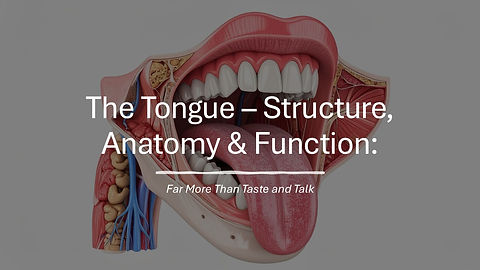
The Tongue – Structure, Anatomy & Function:
Far More Than Taste and Talk

The tongue is often thought of as simply the organ of taste, but in reality, it is one of the most dynamic and multifunctional structures in the body. In this session, we take a closer look at the tongue not only as a sensory organ, but as a muscular, neurological, and communicative hub that plays a central role in daily life. From the moment food enters the mouth to the words we speak, the tongue is continuously at work—coordinating movement, interpreting signals, and interacting with multiple systems throughout the body.
A Complex Structure Within the Oral Cavity
The tongue sits within a highly integrated environment known as the oral cavity, working in coordination with the teeth, palate, salivary glands, and mucosal lining. Composed of interlacing muscle fibers and covered by specialized mucosa, the tongue is uniquely designed for both strength and precision. Its structure allows for remarkable flexibility, enabling it to manipulate food, assist in swallowing, and shape the sounds that become speech. This foundational understanding of anatomy sets the stage for appreciating the tongue’s broader roles.
The Beginning of Digestion
Long before food reaches the stomach, the tongue has already begun the digestive process. It moves and positions food for chewing, forms it into a cohesive bolus, and works alongside saliva to initiate the breakdown of carbohydrates. Just as importantly, the act of tasting and chewing sends signals to the rest of the digestive system, preparing it for what is to come. In this way, the tongue serves not only as a mechanical tool, but also as a coordinator of digestive activity.
Taste, Smell, and Sensory Integration
While the tongue contains specialized receptors for taste, true flavor perception is a combined experience involving both taste and smell. This session explores how taste buds function, the role of saliva in dissolving flavor compounds, and how aromas travel from the mouth to the nasal cavity to create the full experience of taste. The tongue also detects texture, temperature, and irritation, providing continuous sensory feedback that informs both enjoyment and protection.
The Tongue as an Instrument of Speech
Beyond its role in sensation and digestion, the tongue is essential for communication. Working in coordination with the lips, teeth, palate, and airflow from the lungs, it helps shape sound into recognizable speech. Its movements are controlled with remarkable precision, allowing us to articulate words, convey meaning, and express thoughts. In this way, the tongue serves as a bridge between the internal world of thought and the external world of communication.
A Connection Point for Multiple Systems
The tongue and oral cavity are deeply connected to the nervous, immune, and metabolic systems. Rich sensory innervation links the tongue directly to the brain, while the oral mucosa and microbiome contribute to immune defense. Taste receptors and oral signaling also play a role in appetite regulation and metabolic responses. These connections highlight the tongue as more than a localized structure—it is part of a larger network influencing overall health.
The Tongue as Gatekeeper
Perhaps most importantly, the tongue functions as a gatekeeper. It helps determine what enters the body through taste, texture, and sensory evaluation, while also shaping what leaves the body through speech. In this dual role, it serves as both a receiver and an instrument of expression—filtering, interpreting, and communicating in ways that extend far beyond the simple act of tasting.
Looking Ahead
In the next section, we will build on this foundation by exploring what happens when the function of the tongue is disrupted. From taste disturbances and dry mouth to speech difficulties and structural concerns, understanding both normal function and dysfunction provides valuable insight into how to support this remarkable organ.
Click above to view on YouTube; HERE to view on Rumble
Click above to view, download, or share the complete presentation in PDF format.
The Tongue, Taste & Talk – When Things Go Wrong
Decoding Tongue Dysfunction and What It Reveals About Your Health
The tongue is far more than a tool for taste and speech—it is a dynamic, responsive tissue that reflects the state of the body as a whole. When something shifts internally, the tongue is often one of the first places it shows.
In this second part of our exploration, we move beyond structure and function to examine what happens when things begin to go wrong—whether through changes in taste, discomfort, structural alterations, or impaired coordination.
When Taste Changes: More Than Just a Sensory Issue
Changes in taste are among the most common—and often overlooked—signals of imbalance.
These may include:
-
Loss of taste (ageusia)
-
Reduced taste (hypogeusia)
-
Distorted taste (dysgeusia)
-
Phantom taste (phantogeusia)
Because taste receptor cells regenerate rapidly, they are especially sensitive to shifts in nutrient status, medications, infections, and overall metabolic health. Even subtle changes in taste can serve as early indicators that something deeper requires attention.
Burning, Sensitivity, and Discomfort
Conditions such as Burning Mouth Syndrome, glossodynia, and oral hypersensitivity can present with significant discomfort despite little or no visible change in the tongue.
These patterns are often multifactorial, involving:
-
Nutrient deficiencies (especially B12, iron, and folate)
-
Altered nerve signaling
-
Hormonal influences
-
Chronic stress and nervous system dysregulation
In some cases, reduced levels of hormones such as DHEA may also contribute to increased nerve sensitivity and mucosal changes, particularly in postmenopausal women.
What You Can See: Structural Changes of the Tongue
The appearance of the tongue can offer valuable clues:
-
Smooth or glossy tongue may suggest deficiencies such as B12 or iron
-
Scalloped edges can reflect swelling or fluid imbalance
-
Fissures may be associated with chronic dryness or nutrient insufficiency
-
Geographic patterns often correlate with inflammation or stress
These visible changes are not random—they are part of the body’s way of signaling imbalance.
Oral Imbalance: When the Terrain Shifts
The mouth hosts a complex ecosystem that can become disrupted.
Common contributors include:
-
Oral thrush (Candida overgrowth)
-
Bacterial imbalance
-
Dry mouth (xerostomia)
Saliva plays a critical role in maintaining balance, supporting taste, protecting tissues, and preventing infection. When saliva is reduced or the microbiome shifts, both comfort and function are affected.
Speech and Coordination: When Talk Is Affected
The tongue plays a central role in articulation and communication.
Difficulties with speech may arise from:
-
Reduced mobility or coordination
-
Nerve dysfunction
-
Structural limitations such as tongue-tie
Because speech requires precise coordination between muscles and nerves, disruptions in either can impact clarity and ease of communication.
Medications, Infections, and Modern Influences
A wide range of modern factors can affect tongue function and taste, including:
-
Common medications (antibiotics, blood pressure medications, antidepressants)
-
Viral and post-viral effects, including those observed with COVID-19
-
Smoking and environmental exposures
These influences may alter taste directly or indirectly through effects on saliva, nerve signaling, or nutrient status.
Foundational Support: Restoring Balance
The encouraging reality is that many tongue-related issues are reversible when the underlying terrain is addressed.
Key areas of support include:
-
Zinc and essential nutrients to support taste receptor function
-
B vitamins and nerve support for proper signaling
-
Hydration and saliva support
-
Oral hygiene and microbial balance
-
Nervous system regulation
Rather than focusing on symptoms alone, restoring foundational balance often leads to meaningful improvement.
A Window Into Whole-Body Health
The tongue is one of the few places where we can directly observe the body’s internal state without testing or instrumentation. Changes in taste, appearance, or sensation are often early signals—opportunities to recognize and address imbalance before it progresses further.
When we learn how to interpret what the tongue is telling us, we gain a powerful and practical tool for understanding and supporting overall health.
Part of the Wondrous Five Senses Series
This presentation is part of the Wondrous Five Senses Series, where we explore each sense through the lens of structure, function, dysfunction, and natural support.
We have just one more sense to explore—TOUCH—to complete the series!
Click above to view on YouTube or HERE on Rumble!

Click above to view/download thepresentation on PDF!
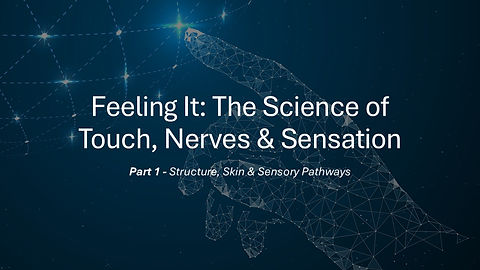
Feeling It: The Science of Touch, Nerves & Sensation – Part 1
Touch is something we experience every moment of every day—yet few of us stop to consider the astonishing complexity behind it.
In this first session on The Sense of Touch, we begin exploring one of the body’s most remarkable and overlooked systems: the intricate sensory network that allows us to detect pressure, texture, vibration, temperature, and pain with extraordinary precision. From the anatomy of the skin itself to the specialized receptors embedded within it, touch is revealed as far more than skin deep.
This presentation examines how sensory information is detected by the skin, transmitted through peripheral nerves, relayed by the spinal cord, and interpreted by the brain—often in fractions of a second. We also explore why certain areas such as the fingertips, lips, and face are so exceptionally sensitive, how the sensory homunculus maps sensation within the brain, and why rapid reflexes can protect us before we are even consciously aware of danger.
Along the way, you’ll gain a deeper appreciation for the body’s built-in sensory intelligence and the extraordinary design behind one of our most constant protective and interpretive systems.
In This Session:
-
The anatomy and structure of the skin
-
Specialized sensory receptors and their functions
-
How touch signals travel from skin to spinal cord to brain
-
The sensory homunculus and brain-body mapping
-
Why fingertips are sensory superstars
-
Reflexes, protective pathways, and rapid nervous system response
-
Fascinating insights into the science of sensation
This is Part 1 of our exploration into touch and sensation. In the next session, we’ll move into what happens when sensation changes—numbness, tingling, burning, neuropathy, dermatomes, hypersensitivity, and what these shifts may reveal about deeper dysfunction.
Click above to view and download the presentation.
Feeling It: The Science of Touch, Nerves & Sensation – Part 2
When Feeling Shifts: Numbness, Tingling, Pain & Dysfunction
In this powerful continuation of the “Feeling It” series, I explore what happens when the body’s sensory system begins to shift away from normal—resulting in numbness, tingling, burning, neuropathy, hypersensitivity, chronic itching, or pain.
Building on Part 1’s exploration of skin, sensory receptors, and normal nerve pathways, Part 2 dives into the often-overlooked warning signs that may point toward deeper issues involving circulation, metabolism, spinal health, immune dysfunction, inflammation, or nerve damage.
This presentation covers:
-
Common forms of altered sensation and what they may indicate
-
Neuropathy, radiculopathy, and dermatomes
-
Neurogenic itch and hypersensitivity
-
Circulatory contributors such as Raynaud’s and nitric oxide deficiency
-
Blood sugar, thyroid, nutrient, and mitochondrial influences
-
Autoimmune and inflammatory mechanisms
-
Foundational nutrient strategies for nerve protection and restoration
-
Herbal, topical, and practical tools to support nerve and circulatory health
From B12 and benfotiamine to glutathione, alpha lipoic acid, magnesium, PEA, DMSO, circulation-supportive herbs, and more, this webinar emphasizes that altered sensation is often more than discomfort—it may be meaningful communication from the body.
Click above to view on YouTube or here to view on Rumble!
